March is still low season in Croatia but this is also the start of a warmer season.
As spring comes in, daylight hours are longer and attractions that were closed during winter resumes welcoming visitors again.
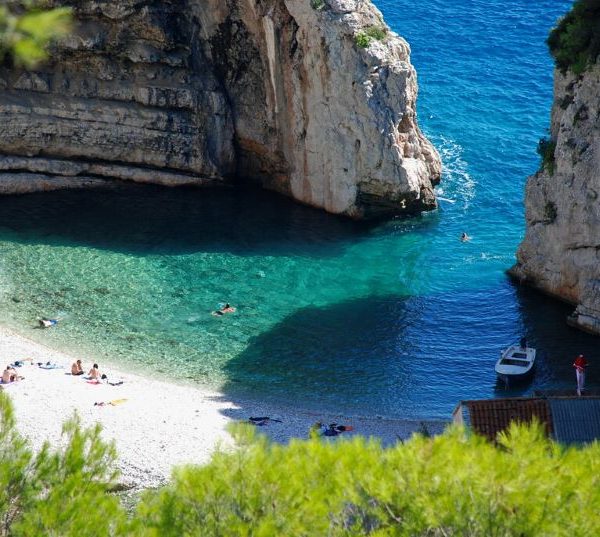
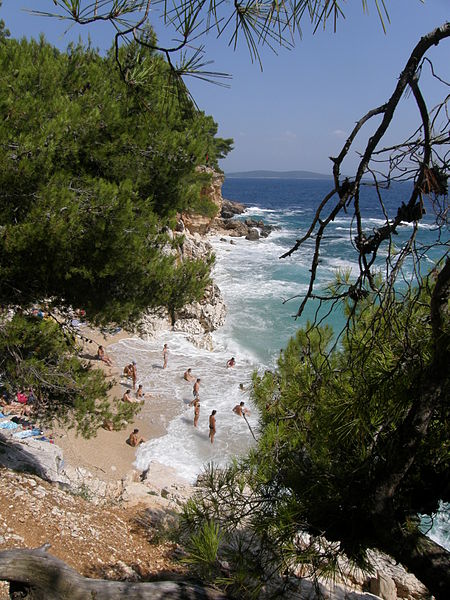
Croatia in March is widely regarded as a month for outdoor activities. It is also a great time to visit the beaches before they start filling up during the spring break.
New to Airbnb? Get a $43 off for your next trip if you use our link here.
If you’re visiting Croatia in March, here’s a guide to help you know what to expect regarding the weather, things to do and some travel tips.
Contents
What is the weather like in Croatia In March?
Temperature in Croatia in March
Croatia’s average temperature in March ranges from 6.3°C to 14.0°C.
Rain in Croatia in March
Rain: For March, Croatia gets about 71 mm of rain on average over a period of 9 days.
Wind in Croatia in March
Wind: The usual wind speed in Crot in March is around 9.8 to 10.6 miles per hour.
Sun in Croatia in March
As the weather gets warmer in March, daylight in Croatia is longer at 12 to 13 hours. Sunrise is before 6 am, while sunset is between 6 to 7 pm.
What to pack in Croatia for March
March, April, and May are the spring season in the country. Spring in Croatia is still colder than usual, bit weather is generally mild and perfect for exploring. The items listed here are ideal for still keeping warm, yet comfortable and ensures easy movement.
V-neck shirts – bring at least 3, in different colors. These are versatile and easy to pair with anything. Like these cotton v-neck shirts. You can wear a jacket over it as well or dress it u with a scarf if the weather gets chilly. You can check these shirts here.


Long-sleeved shirts — always a good idea, these are best for keeping you warm and also goes well with pretty much anything. Wear with leggings or
jeans for a casual walk around town, wear underneath a jacket or just wear a scarf for dining out or date night. Check out these long sleeve shirts.
Knee-length or mid-calf skirts — a great alternative for jeans and leggings that you can wear if you’re museum-hopping in Zagreb or hanging out at the Roman forums in Zadar, or exploring Diocletian’s Palace in Split, such as this pretty Zara skirt. It’s comfortable and just a bit dressy, looks great in photos, too!


Black leggings — this item should be in your travel must-haves any season of the year as it’s versatile, easily keeps you warm and goes well with pretty much anything.
Comfort fit jeans — you can easily layer these jeans with leggings if the weather gets too cold, and also ensures easier movements when embarking on long-distance walks or hikes.


Crease proof dress pants (for men) — be sure to bring at least a couple of these as an alternative to jeans. It’s dressy but it’s versatile, something that will take you from day strolls around the city to a fine dinner in the evening. See this stylish wrinkle-resistant pants from Vegorrs.


Sneakers — your go-to footwear that’s comfortable and looks good whether you’re wearing jeans, pants or a skirt. These superstar Adidas sneakers are perfect for any occasion and season.
Reusable water bottle with filter – sure, Croatia’s tap water is generally clean and safe to drink, but it’s always best to bring your own reusable bottle for quick refills and to help eliminate the use of plastic. Buy something like this RPA-free bottle.


Sturdy, Foldable Umbrella — Croatia does have surprise rain showers any time of the year so this one’s a definite must to keep you protected. Pack something like this compact windproof travel umbrella.
A handy bathroom kit — it’s really just made up of hand sanitizer and wet wipes (tissue is optional) which is useful when you commute or during your city sightseeing tours on foot. Also, a great way to stay clean and germ-free. This Purell hand sanitizing wipes travel pack is handy as both sanitizer and wipes.


Comfortable Hiking Boots — a must if you’re planning to explore national parks, mountains, fortresses, lighthouses and even a stroll around a particular city on foot. Pick the ones that are a bit dressy so you can wear them on your other Croatia activities, too. Just like this one from Xpeti which comes in different colors.
Things To Do In Croatia In March
1. Explore the northern coast

Croatia has so much to offer than its historic capital, Game of Thrones locations and the beaches in the South. The country’s northern coast is a wonderful place to visit in March, with its old towns and stunning attractions.
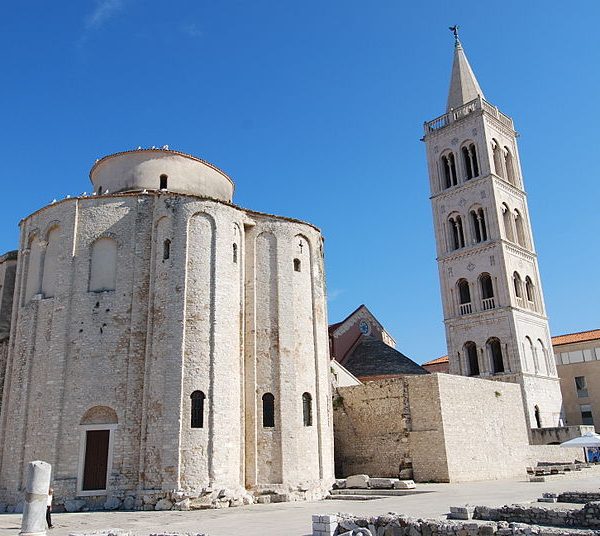
Zadar is a lovely alternative to the touristy Split, with its ancient Roman structures and pretty harbor. A must-see here are two incredible installations by the seafront – the Sea Organ and the Salute To The Sun.
The city of Pula is another must-visit in the north, known for its impressive well-preserved structures that date back to the Roman times. One of these is the Pula Arena, a massive amphitheater that’s easily the Croatian counterpart of Rome’s Colosseum.
2. Ivan Mestrovic Gallery

Get your culture on and explore one of the most beautiful museum galleries in Croatia – the Ivan Mestrovic Gallery.
Located in Split, this museum is home to the work of renowned Croatian sculptor Ivan Mestrovic. The collection is pretty extensive, and definitely one of the best things to see in Croatia. Two floors of the gallery are occupied by the permanent exhibits.
The collections here are comprised of Mestrovic’s important works such as drawings, furniture and even scale models of his architectural designs.
The gallery, as well as the areas around it, are all based on Mestrovic’s plans. These include residential and office areas, as well as a gallery.
All the items on display are interestingly arranged according to the subject matter.
Still within the grounds of the gallery is an outdoor park where you’ll find numerous sculptures, all crafted by Mestrovic.
3. Croatian National Theatre

Located in Zagreb, one of the must-visit apart from the many museums is the National Theatre.
Built in the 1800s, the Croatian National Theater boasts of a stunning wall fountain by the entrance, which was designed by Ivan Mestrovic.
The theater is primarily the home of seasonal stage plays, ballet, and opera. The productions range from well-loved classics to contemporary favorites – performed by both local and international artists.
4. Trsat Castle

Perched on a hill, Trsat Castle Is another of Croatia’s attractions that are a must-see. Its location comes with sweeping views of the Adriatic and the Rjecina River Valley.
Found in the town of the same name in the Rijeka area, the castle is said to have been built on an ancient Roman fortification. The castle that we see today is a result of a reconstruction in the 19th century.
This move was because it was discovered then that the mausoleum of ancient military commander Laval Nugent was constructed on the inside of the fortress.
A member of the Croatian royalty Vuk Krsto Frankopan was buried in one of Trsat Castle’s churches.
This historic structure is a lovely place to explore with its well-preserved interiors and various outbuildings. A must visit is the courtyard home to a restaurant that’s popular among locals and tourists alike.
5. Northern Velebit

Croatia in March wouldn’t be complete without a visit to a national park. The Northern Velebit National Park is a haven for outdoor adventurers as well as those looking for picture-perfect sceneries.
Located in Lika-Senj county, the park boasts of diverse landscapes, quaint villages and stunning views of the Adriatic.
For hikers and trekkers, the 57km Premužić Trail doesn’t disappoint with paths that alternate between lush forests and rocky terrain.
There’s also the more challenging Zavižan, which is the main peak at 1676m high, which offers breathtaking views of the Kvarner Gulf below.
6. Sample Oysters in Ston

While in Croatia in March, take part in a delicious festival where you can enjoy oysters at their very best.
In this quaint village called Ston in the Dubrovnik-Neretva County of Croatia, the Oyster Festival usually happens around late March, and all the local restaurants take part.
Any dish that could possibly be prepared using oysters are featured and offered to the public as part of the menu. However, the main festival takes place in the Mali Ston seafront promenade.
Here, you’ll get to sample raw oysters served in a half shell, sprinkled with lemon juice. Oysters cooked and presented in different ways can also be sampled here.
You can have them grilled, fried, baked with cheese, in a soup or stew.
Paired with local wine, this is one of the best things to do in Croatia in March that truly gives you a taste of this beautiful country.
Travel Tips For Croatia In March

1. As you plan your March holiday in Croatia, check for long term weather forecasts. This will help determine which places to visit on certain days and what to pack in your day bags.
Knowing the weather also ensures that you’d be better prepared and could come up with alternative plans in case of sudden weather changes.
2. Regular ferry schedules resume by March, so include a visit to islands like Brac, Hvar, and Korcula.
These places have picturesque old towns you can walk around in as well as stunning beaches for lounging, sunbathing and swimming.
3. Croatia’s transport schedule is just starting to get back to its regular operating hours in March.
If you want to make the most of the longer days and see as much of Croatia as you can, your best bet is to rent a car.
This way, you get to explore different towns and cities at your own pace and even stumble upon hidden gems as you cruise through Croatia’s scenic highways.
4. As the temperature turns from extremely cold to warm, you’d most likely be prone to seasonal allergies and other conditions brought by weather changes.
Always bring medicines for fever, colds, coughs, pains, and allergies as well as vitamins to ensure a healthier and safer trip.
5. A light jacket that’s weatherproof is a March essential that should be in your luggage or day bag.
These are light enough to fit in your bag and warm enough to protect you from Croatia’s fickle weather. Buy something like this one.