Like most European cities, Croatia has a wealth of historic old town centers, stunning fortresses, well-preserved castles, and ancient ruins. What sets it apart though is its diverse natural landscape, whether in the mainland or in the many islands off its coast.
Located in the Balkans, Croatia has been a popular tourist destination since its Declaration of Independence and continues to gain popularity among travelers over the years. If you’re going to Croatia for the first time or returning to see more of it, it’s best to explore both the popular and the off the beaten track destinations.
Here are some of the best places to visit in Croatia to help make the most of your visit.
Contents
10 Best Places To Visit in Croatia
1. Dubrovnik

Croatia’s Dubrovnik is nicknamed ‘Pearl of the Adriatic’, and one of the most visited places in the Mediterranean. Founded in the 7th century, Dubrovnik is located in the southern tip of Croatia facing the Adriatic sea.
Its picturesque old town has recently enjoyed immense exposure via the hit fantasy TV series ‘Game of Thrones’ as a good part of it was used in a number of memorable scenes. Dubrovnik also has many beaches, with some of them located in nearby islands.
There’s also the island of Lokrum, which was also featured in ‘Game of Thrones and a green island covered with pine forests perfect for hiking.
Dubrovnik also offers stunning locations that are perfect for capturing Instagram-worthy photos like Fort Lovrijenac, Dubrovnik city walls and more. Make sure to include some of these beautiful spots in your itinerary. And don’t miss this list of Dubrovnik Instagram captions that will help you showcase your experience.
2. Hvar

One of the most popular Croatian islands is Hvar, which is also one of the top places to visit on this side of Europe. With its diverse townscapes, stunning scenery and beautiful beaches, Hvar is an ideal vacation spot.
Hvar is a gorgeous island where there’s a lot to see and do, like visiting lavender fields and vineyards. This island also has impressive well preserved historic sites like ancient walls, churches, palaces, and fortresses — most of them surrounding a town square that’s said to be the most beautiful in Croatia.
The natural landscape and beaches of Hvar, meanwhile, are ideal for all sorts of activities such as hiking in the cliffs, diving into the crystal blue waters or swimming in hidden coves and beaches.
3. Krka
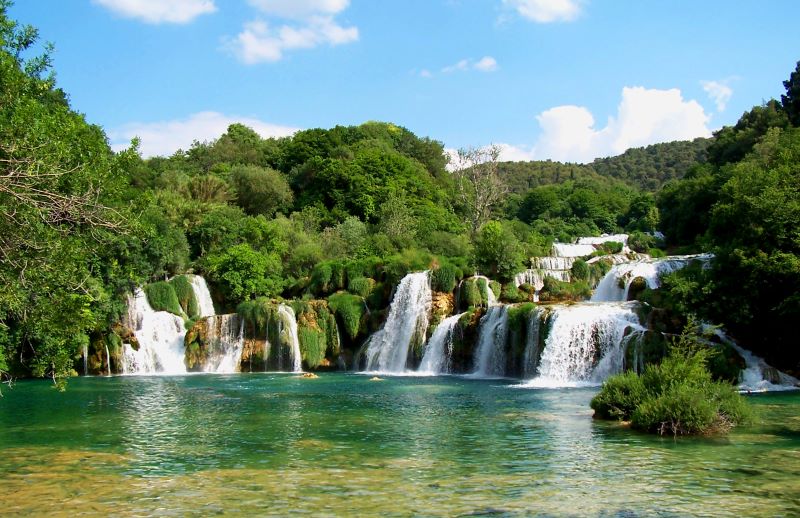
Easily accessible from Split, Krka National Park is known for its many waterfalls and natural pools of crystal clear waters. It’s a protected area filled with diverse natural scenery, historic sites, and wildlife.
It is situated along the Krka River within Sibenik-Knin County, the park has well-maintained hiking trails and boat trips that lead around the waterfalls. Some of these falls go straight into the pools, making it perfect for swimming.
There are also appointed areas for wildlife sorting, with most of these as picturesque as the park itself. Krka is also one of the best national parks in Croatia.
Opening Hours
January – February, November– December
9:00 am- 4:00 pm
March -9:00 – 5:00 pm
April – 8:00- 6:00 pm
May, September – 8:00 pm- 7:00 pm
October 1-15 -8:00 am- 6:00 pm
October 16-31 -9:00- 5:00 pm
Admission Fee
Krk National park
For full entry to all areas of the park
January- March, November-December
Adults- 30 kn (€4.06)
Children ( 7-18 )- 20 kn (€2.68)
April- May, October
Adults- 100 kn (€13.44)
Children ( 7-18 )- 80 kn (€10.76)
June–July, August and September
Adults- 200 kn (€26.87)
Children ( 7-18 )- 120 kn (€16.13)
Children up to 7 – Free
Contact Information
Phone: +385 (0)22 201-777
Address: Nacionalni park Krka Trg Ivana Palva II br. 5 22000 Sibenik
Email: info@npk.hr
4. Rovinj

A quaint and picturesque town made up of 20 islands, Rovinj may not be as famous as the other cities in this list, but it’s a gem that’s among the best places to visit in Croatia.
Rovinj is located in Croatia’s Istrian peninsula in the Adriatic Sea, an interesting town with so much to see and do. For one, its Old Town is set on a small peninsula, with narrow cobblestone streets, arches, and stairways.
This part of Rovinj also has seven medieval city gates, a 12th-century town clock, and a stunning baroque church that’s home to a stunning art collection. Rovinj’s scenic harbor is also worth a visit, with streets lined with art galleries and souvenir shops.
5. Pula
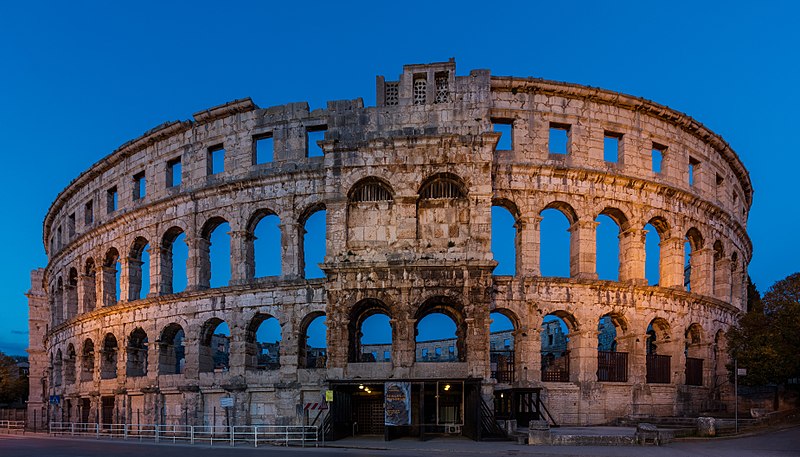
Home to one of the world’s biggest and well preserved ancient amphitheater, Pula is one of Croatia’s best places to visit. Its old town center is filled with ancient gems mixed with modern structures. It has been drawing visitors since the Roman times when fans would go here to watch gladiator fights.
At present, it is a vibrant city that’s a good mix of the old and the new, where you can sip coffee with a view of a 2,000-year-old structure or watch a unique musical lights show by the waterfront.
6. Stiniva Beach, Vis Island

Located in Vis island, the secluded Stiniva was hailed as Europe’s best beach, and it’s easy to see why. Surrounded by soaring cliffs, the beach isn’t easily accessible, making it ideal for those looking for a perfect natural retreat.
It’s secluded and you get to enjoy the crystal blue waters Croatia’s beaches are known for. It’s also part of a beautiful island that’s the farthest from the country’s coastline, making it quite an adventure to visit as you get to enjoy scenic views on the way before arriving in this hidden paradise.
7. Plitvice

A national park known for its 16 crystalline lakes, Plitvice is one of the best places to visit in Croatia. This place has been on the UNESCO World Heritage list since 1979, and home to bears, evolves, and 120 bird species.
Plitvice’s famous lakes are definitely a must-see, as all sixteen of them are interconnected with each other. The best way to really explore the park is on foot, which will take hours as the park is huge. There are numerous hiking trails and walkways though, which all either lead to or go around some of Plitvice’s best attractions.
Opening Hours
Winter:(from last Sunday in October) – daylight saving time (until last Saturday in March)
8am – 4pm
Spring: Daylight Saving Time (since last Sunday in March)
8am – 7pm
Summer: ( June 1- August 20)
7am – 8pm
Autumn: August 21-September 30
7.00 am – 7:00 pm
October 1. – winter time calculation (until last Saturday in October)
8am – 6pm
Admission Fee
January to March and in November and December
Adults – 80.00 Kuna €10.75)
Adult group -75.00 Kn (€10.08)
Students- 50.00 Kn (€6.72)
Student groups- 45.00 Kn (€6.05)
Children from 7 to 18 years 35.00 Kn (€4.70)
Children from 7 to 18 years – groups 30.00 Kn (€4.06)
April to May and October
Adults – 180.00 Kuna (€24.20)
Adult group -160.00 Kn (€21.51)
Students- 110.00 Kn (€14.79)
Student groups- 100.00 Kn (€13.44)
Children from 7 to 18 years 50.00 Kn (€6.72)
Children from 7 to 18 years – groups 45.00 Kn (€6.05)
June-September
Adults – 300.00 Kuna (€40.34)
Adult group -300.00 Kn (€40.34)
Students- 200.00 Kn (€26.87)
Student groups- 200.00 Kn (€26.87)
Children from 7 to 18 years 120.00 Kn (€16.13)
Children from 7 to 18 years – groups 100.00 Kn (€13.44)
Children up to 7 years and people with special needs with disabilities over 50% ** free
Contact Information
Phone: +385 (0)53 751 015, +385 (0)53 751 014
Address: 53231 Plitvička Jezera
Email: info@np-plitvicka-jezera.hr
8. Split

Split is Croatia’s second-largest city and known mostly for the Gothic and Renaissance architecture showcased in its historic city center. Also called the ‘Mediterranean Flower,’ Split is located on the peninsula off the Dalmatian coast. One of the city’s top attractions is the Diocletian’s Palace, built-in 298 to 305 AD for a legendary Roman emperor.
This place is like a tiny city in itself, with the maze of buildings and walkways lined with cafes and shops. Outside the city center, you can stroll along the seaside promenade, shopping at farmer’s markets and enjoying the waters of nearby beaches such as Bacvice.
9. Zadar

Situated in Croatia’s northern Dalmatian Coast is the 3,000-year-old city of Zadar, known for its ancient gates and walls. It’s an ideal destination for anyone who wanted to experience a bit of Croatia’s ancient history, without the huge crowds, as well as enjoy the coastal scenery.
The Old Town is known for its medieval architecture showcased in churches, monuments, and buildings, as well as the Roman ruins. Part of its coastal area is home to two of the most stunning pieces of modern art — the Sea Organ and Greeting to the Sun, which is best visited during sunset or evening.
10. Zagreb

Zagreb is the capital city of Croatia, as well as the largest among all Croatian cities. It is known for its diverse cityscapes, which is a wonderful mix of the old and the new, and for its many museums.
Zagreb dates back to the 11th century and is now the center of Croatia’s culture, education, and government. The city is divided into the Upper Town and Lower Town, in which the Upper Town is the historic area cramped with medieval structures and monuments as well as cobbled streets.


